
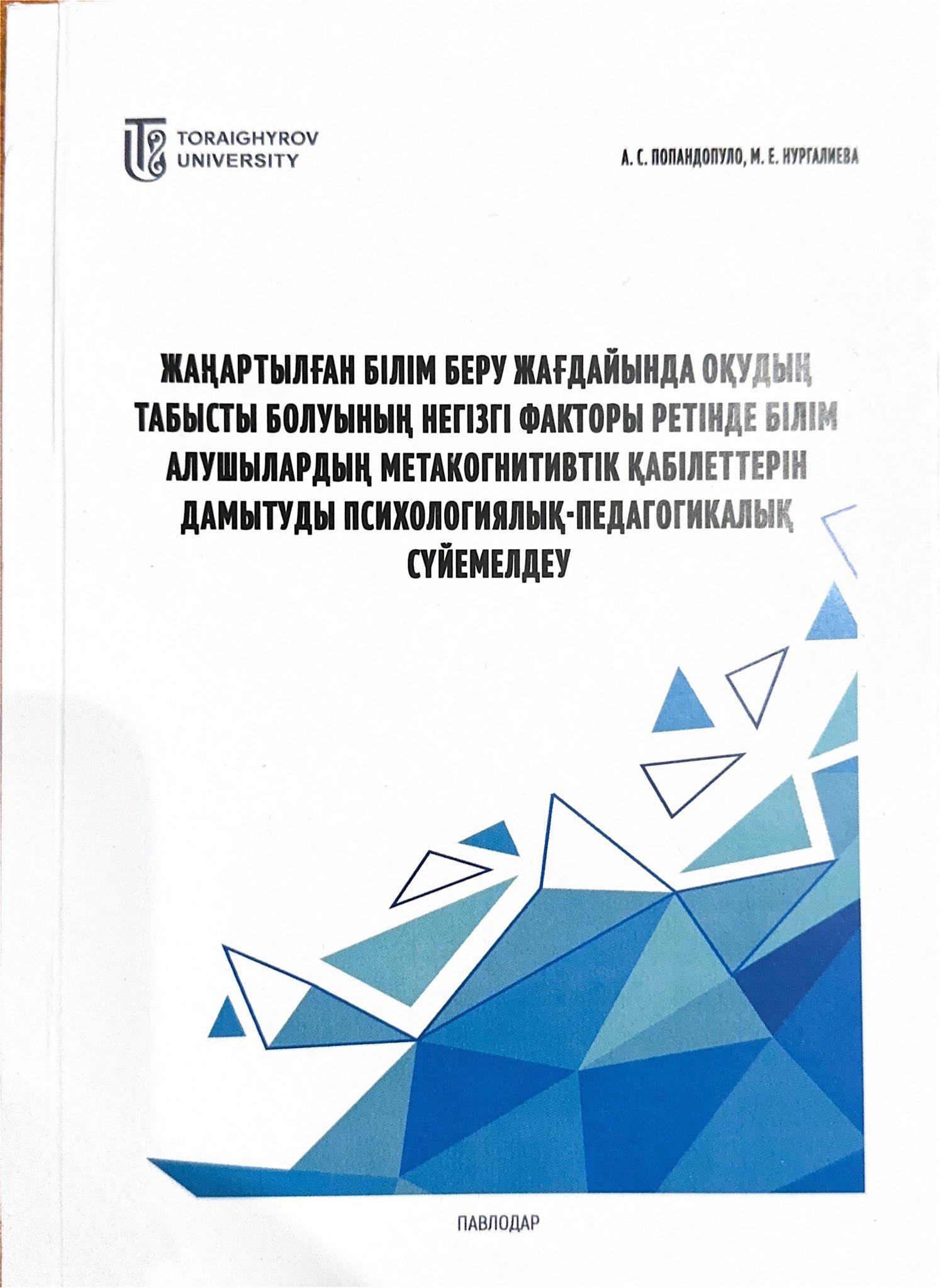
Monograph title: PSYCHOLOGICAL-PEDAGOGICAL SUPPORT FOR THE DEVELOPMENT OF LEARNERS’ METACOGNITIVE ABILITIES AS A KEY FACTOR IN SUCCESSFUL LEARNING IN THE CONTEXT OF UPDATED EDUCATION
Author: Popandopulo Anar Serikovna, Nurgaliyeva Murshida Yelubayevna
ISBN 978-601-345-555-6
Brief Description: The monograph is devoted to the theoretical, methodological, and practical investigation of the development of schoolchildren’s metacognitive abilities in the context of updated educational content.
The first chapter examines the theoretical and methodological foundations of metacognition: it analyzes the metacognitive trend in psychology, clarifies the subject of metacognitivism and its relationship with general psychological categories, defines the structure and components of metacognition (metacognitive knowledge, strategies, and experiences), and determines the place of metacognitive functions within the personality structure. Particular attention is paid to the interconnection between metacognition and learning processes.
The second chapter addresses the acmeological aspect of learners’ metacognitive sphere. It substantiates the relevance of developing metacognitive abilities as one of the key competencies of the future. The chapter presents metacognitive processes in students’ learning activity, the pedagogical conditions for their formation, and the author’s original model for developing schoolchildren’s metacognitive abilities.
The third chapter describes the practical-experimental work. A program of psychological-pedagogical support for the development of metacognitive abilities has been designed and tested; the technologies, methods, and tools of this process are disclosed. The results of the experimental work are presented, confirming the effectiveness of the proposed model and program.
The monograph is intended for psychologists, educators, researchers, doctoral and master’s students, as well as for everyone interested in the issues of developing metacognitive abilities and the modernization of contemporary education.
Contents:
|
|
Introduction |
3 |
|
1 |
Theoretical and Methodological Foundations of Metacognition Development |
7 |
|
1.1 |
Metacognitive Trend in Psychology |
7 |
|
1.2 |
Subject of Research in Metacognitivism and General Psychological Categories |
24 |
|
1.3 |
Metacognition and Metacognitive Abilities; Metacognition and Learning |
46 |
|
1.4 |
The Place of Metacognitive Functions in the Structure of Personality |
81 |
|
1.5 |
Components of Metacognition: Knowledge, Strategies, Experiences |
93 |
|
2 |
Acmeology of the Metacognitive Sphere of Learners |
97 |
|
2.1 |
Metacognitive Processes in the Learning Activity of Students |
97 |
|
2.2 |
Metacognitive Abilities of Learners as a Future Need in the Context of Updated Educational Content |
103 |
|
2.3 |
Pedagogical Conditions of the Educational Process and a Model for Developing Students’ Metacognitive Abilities |
116 |
|
3 |
Practical-experimental work on developing schoolchildren’s metacognitive abilities in the context of updated education |
131 |
|
3.1 |
Program of Psychological-Pedagogical Support for the Development of Students’ Metacognitive Abilities. Core Processes of the Program in the Context of Educational Renewal |
131 |
|
3.2 |
Technologies, Methods, and Tools for the Process of Developing Schoolchildren’s Metacognitive Abilities |
149 |
|
3.3 |
Results of the Experimental Work |
177 |
|
|
Conclusions |
192 |
|
|
References |
195 |
The full text of the monograph is available at the Beisembayev Library («Toraighyrov University» NJSC library), 64 Lomov Street, Pavlodar, Kazakhstan.
For purchase inquiries, please contact the Toraighyrov University Publishing House.
Contacts:
Phone: +7 (7182) 67-36-69 (ext. 1147)
E-mail: kereku@tou.edu.kz

Monograph title: THE FORMATION AND DEVELOPMENT OF SCIENTIFIC RATIONALITY
Author: Kozhamzharova Mayra Zhanaidarovna
ISBN 978-601-345-337-8
Brief Description: This monograph examines the development and genesis of the problem of scientific rationality through the lens of the entire history of philosophical thought. The criteria for studying this problem in the pre-scientific, classical, non-classical, and post-non-classical periods are based on the typification of the rational proposed in the works of V.S. Stepin, M.K. Mardashvili, V.V. Ilyin, and others, such as the scientific picture of the world, ideals and norms, as well as the philosophical foundations of scientific knowledge characteristic of each period under study.
The first chapter is devoted to a historical and philosophical analysis of the development of rational thinking, from its primary structures to classical science. It is shown that already at the dawn of human history, rationality emerged as an integral property of human goal-directed activity. The semantic richness of mythic thought and the presence within it of the beginnings of universal methods of cognition indicate that even during this period, a demand for a rational understanding of reality was realized. Myth can be characterized as a "cognitive paradigm" of archaic culture, in which rationality is represented in its rudimentary forms. Humanity owes the discovery of rationality as such to the ancient Greeks. In ancient culture, rationality constitutes the status of philosophical and theoretical thinking, capable of comprehending the essence of things. It serves as a criterion for the universality and necessity of knowledge, defining the ideal of theoretical cognition. The evolution of the ancient type of rationality continued the transition from "mythos" to "logos," culminating in the triumph of reason, striving for good as the highest value. Medieval and Renaissance cultures each, in their own way, continued the line of ancient rationality, imposing on its certain limitations caused by their mental characteristics. Here, the mathematical ideal of knowledge gradually took hold, which served as the impetus for the formation of experimental-mathematical natural science.
The second chapter reveals that the intensive development of science as a sociocultural institution contributed to the formation of a scientific-theoretical mentality, which became a key dominant feature of modern European culture. Scientific rationality emerged in the form of Newtonian mechanics, the culmination of the intellectual efforts of philosophers and scientists, and was marked by a mechanistic worldview and the ideals of mathematically precise objective knowledge, the truth criterion of which was experiment.
The non-classical type of scientific rationality is characterized as going beyond the boundaries of classical science, which was finally formed by the end of the 19th century, as overcoming the boundaries of scientific knowledge designated by its theories and, accordingly, as the construction of a new scientific picture of the world (for example, quantum-relativistic in physics), corresponding to the changed ideals and norms of scientificity, where the main shift is associated with the increase in the activity of the subject of knowledge.
The formation of a post-non-classical type of scientific rationality is conditioned by the need to study new, more complex objects (human-dimensional or chaotic systems), which leads to fundamental changes in the understanding of subject-object relations; a new ontology is being formed, oriented toward the integrity of the world, toward restoring the integrity of the «World - Man» relationship, which finds its expression in the intentions to restore the unity of science.
The monograph is aimed at a wide audience of students studying natural sciences and humanities and will be of interest to philosophers, researchers and anyone who seeks a deeper understanding of the problems of science and its significance in modern culture.
Contents:
|
|
Introduction |
3 |
|
1 |
The formation and development of rationality in the pre-scientific period |
6 |
|
1.1 |
Genesis of the Primary Structures of Rational Thinking: From Myth to Logos |
6 |
|
1.2 |
The ancient project of rationality |
22 |
|
1.3 |
Rationality in the context of Medieval and Renaissance culture |
43 |
|
2 |
Philosophical understanding of scientific rationality in Modern and Contemporary Times |
62 |
|
2.1 |
Rationality and classical science. The classical type of scientific rationality |
62 |
|
2.2 |
From Classics to Non-Classics: Metamorphoses in Thinking Patterns |
83 |
|
2.3 |
Contours of a New Rationality in Post-Non-Classical Science |
103 |
|
|
Conclusion |
133 |
|
|
References |
138 |
The full text of the monograph is available at the Beisembayev Library («Toraighyrov University» NJSC library), 64 Lomov Street, Pavlodar, Kazakhstan.
For purchase inquiries, please contact the Toraighyrov University Publishing House.
Contacts:
Phone: +7 (7182) 67-36-69 (ext. 1147)
E-mail: kereku@tou.edu.kz
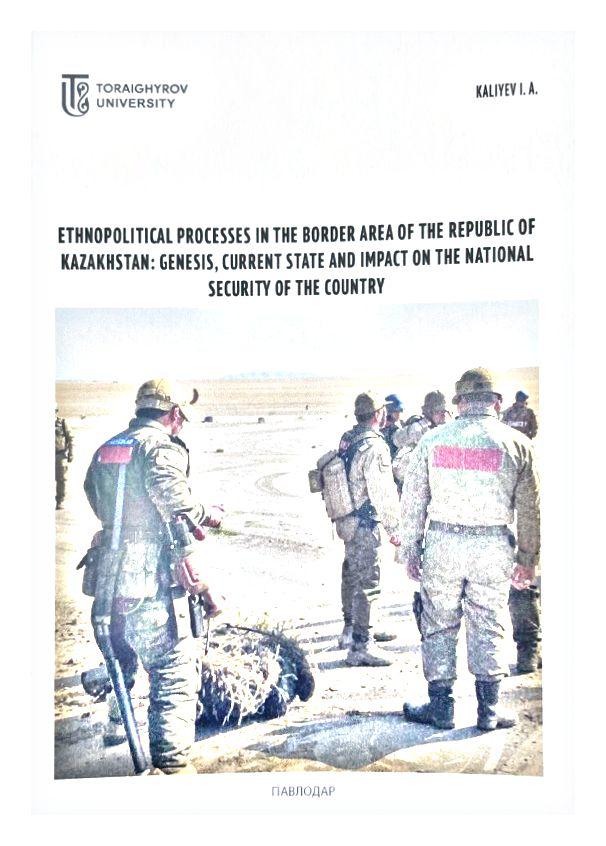
Title of the monograph: ETHNOPOLITICAL PROCESSES IN THE BORDER SPACE OF THE REPUBLIC OF KAZAKHSTAN: GENESIS, CURRENT STATE AND IMPACT ON THE NATIONAL SECURITY OF THE COUNTRY
Author: Kaliyev Ildar Abuzhanovich
ISBN 978-601-382-062-0
Brief description: This monograph is dedicated to a comprehensive study of ethnopolitical processes in the border regions of the Republic of Kazakhstan, covering their historical development, current status, and impact on the country's national security. It analyzes theoretical and methodological approaches to the study of ethnopolitical processes, their evolution, and the role of ethnicity in the contemporary political context.
The work examines key theories and methods used in the analysis of ethnopolitical processes, analyzes global and regional trends in ethnopolitics, including emerging issues. It also examines the influence of ethnicity on political processes in Central Asia.
This article evaluates the legacy of Soviet nationalities policy and its influence on contemporary ethnopolitical processes. It analyzes past and current interethnic conflicts and their impact on the country's national security.
It presents an assessment of the current state of ethnic relations and their adaptation to changing conditions. Key areas of Kazakhstan's state program in the field of ethnopolicy are highlighted, along with scientific and practical conclusions aimed at a deeper understanding of ethnopolitical processes and their impact on the security and stability of the Republic of Kazakhstan.
The first chapter examines the evolution of theoretical approaches to the analysis of ethnopolitical processes, highlights the main trends and challenges of ethnopolitical processes in the modern world, and highlights the role of ethnicity in the contemporary political process.
The second chapter examines the specifics of nationalities policy in the USSR, interethnic conflicts as a threat to the national security of the Republic of Kazakhstan, and the multiethnic ethnic environment as a factor influencing national security in the border area of the Republic of Kazakhstan.
The third chapter analyzes the current ethnic situation in the Republic of Kazakhstan in a changing geopolitical reality. This article examines the priority areas of the Republic of Kazakhstan's border policy, taking into account the influence of ethnopolitical factors, as well as the state-forming ethnic group as a factor in interethnic stability in the Republic of Kazakhstan.
Chapter four examines sociopolitical processes in the border area of the Republic of Kazakhstan, internal migration as a factor in regional ethnopolitics, and risk factors for interethnic conflicts in border regions.
Chapter five focuses on the role of the Assembly of the People of Kazakhstan as a factor in interethnic harmony and unity, and also explores the role of national security in ensuring a stable civil, multiethnic, and multi-religious society.
In the conclusion, the author analyzes the current state of ethnic relations and their adaptation to changing conditions. Key areas of Kazakhstan's state policy in the field of ethnopolicy are highlighted, and scientific and practical conclusions are provided aimed at a deeper understanding of ethnopolitical processes and their impact on the security and stability of the Republic of Kazakhstan.
Content
|
|
Preface |
3 |
|
1 |
Theoretical and methodological approaches to the study of ethnopolitical processes |
6 |
|
1.1 |
Evolution of theoretical approaches to the analysis of ethnopolitical processes |
6 |
|
1.2 |
Ethnopolitical processes in the modern world: main trends and problems |
14 |
|
1.3 |
The role of ethnicity in the modern political process (Central Asian context) |
23 |
|
2 |
Genesis of ethnopolitical processes in the historical dimension in the context of a multinational society |
29 |
|
2.1 |
Peculiarities of national policy in the USSR |
29 |
|
2.2 |
Ethnic conflicts as a threat to national security of the Republic of Kazakhstan |
51 |
|
2.3 |
Polyethnic ethnoenvironment as a factor influencing national security in the border area of the Republic of Kazakhstan |
64 |
|
3 |
Current state of ethnopolitical processes in the border area of the Republic of Kazakhstan |
75 |
|
3.1 |
The current ethnic situation in the Republic of Kazakhstan in the changing geopolitical reality |
75 |
|
3.2 |
Priority directions of the border policy of the Republic of Kazakhstan taking into account the influence of ethnopolitical factors |
86 |
|
3.3 |
State-forming ethnic group as a factor of interethnic stability in the Republic of Kazakhstan: theory and practice |
97 |
|
4 |
The influence of the ethnopolitical specificity of the border regions of the Republic of Kazakhstan on its national security |
103 |
|
4.1 |
Social and political processes in the border area of the Republic of Kazakhstan |
103 |
|
4.2 |
Internal migration as a factor in regional ethnopolitics |
111 |
|
4.3 |
Risk factors for ethnic conflicts in border countries |
119 |
|
5 |
Peculiarities of national policy in modern Kazakhstan |
128 |
|
5.1 |
The state as a regulator of ethnic relations in the Republic of Kazakhstan: political and legal foundations for the development of ethnic groups |
128 |
|
5.2 |
The Assembly of the People of Kazakhstan as a factor of interethnic harmony and unity |
133 |
|
5.3 |
Ensuring national security of the Republic of Kazakhstan through the construction of a legal, civil, multi-ethnic and multi-confessional society |
139 |
|
|
Conclusion |
155 |
The full text of the monograph is available at the Beisembayev Library («Toraighyrov University» NJSC library), 64 Lomov Street, Pavlodar, Kazakhstan.
For inquiries regarding purchasing the monograph, please contact the publishing house “Toraighyrov University”.
Contacts:
Phone number: 7 (7182) 67-36-69 (int. 1147)
e-mail: kereku@tou.edu.kz
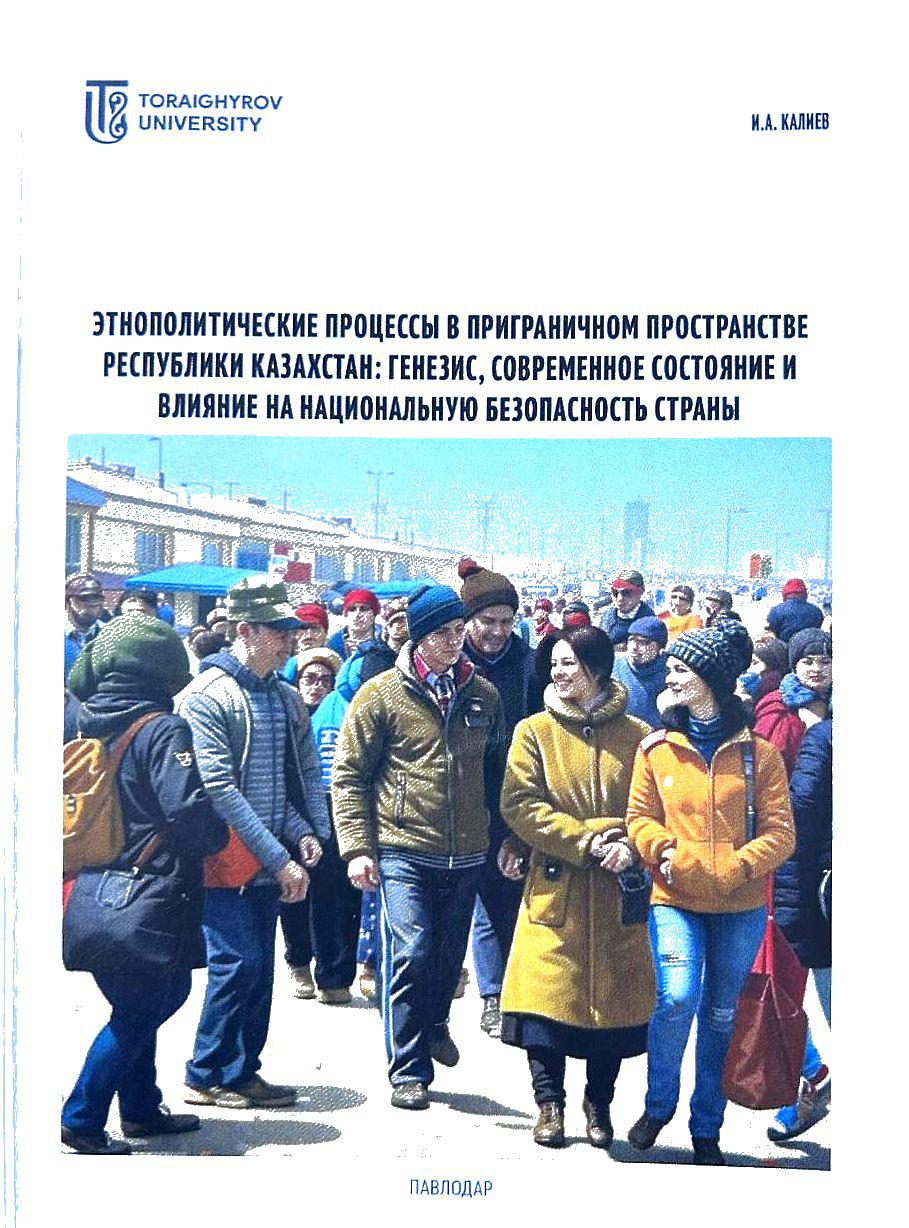
Title of the monograph: ETHNOPOLITICAL PROCESSES IN THE BORDER SPACE OF THE REPUBLIC OF KAZAKHSTAN: GENESIS, CURRENT STATE AND IMPACT ON THE NATIONAL SECURITY OF THE COUNTRY
Author: Kaliyev Ildar Abuzhanovich
ISBN 978-601-382-011-8
Brief description: This monograph is dedicated to a comprehensive study of ethnopolitical processes in the border regions of the Republic of Kazakhstan, covering their historical development, current status, and impact on the country's national security. It analyzes theoretical and methodological approaches to the study of ethnopolitical processes, their evolution, and the role of ethnicity in the contemporary political context.
The work examines key theories and methods used in the analysis of ethnopolitical processes, analyzes global and regional trends in ethnopolitics, including emerging issues. It also examines the influence of ethnicity on political processes in Central Asia.
This article evaluates the legacy of Soviet nationalities policy and its influence on contemporary ethnopolitical processes. It analyzes past and current interethnic conflicts and their impact on the country's national security.
It presents an assessment of the current state of ethnic relations and their adaptation to changing conditions. Key areas of Kazakhstan's state program in the field of ethnopolicy are highlighted, along with scientific and practical conclusions aimed at a deeper understanding of ethnopolitical processes and their impact on the security and stability of the Republic of Kazakhstan.
The first chapter examines the evolution of theoretical approaches to the analysis of ethnopolitical processes, highlights the main trends and challenges of ethnopolitical processes in the modern world, and highlights the role of ethnicity in the contemporary political process.
The second chapter examines the specifics of nationalities policy in the USSR, interethnic conflicts as a threat to the national security of the Republic of Kazakhstan, and the multiethnic ethnic environment as a factor influencing national security in the border area of the Republic of Kazakhstan.
The third chapter analyzes the current ethnic situation in the Republic of Kazakhstan in a changing geopolitical reality. This article examines the priority areas of the Republic of Kazakhstan's border policy, taking into account the influence of ethnopolitical factors, as well as the state-forming ethnic group as a factor in interethnic stability in the Republic of Kazakhstan.
Chapter four examines sociopolitical processes in the border area of the Republic of Kazakhstan, internal migration as a factor in regional ethnopolitics, and risk factors for interethnic conflicts in border regions.
Chapter five focuses on the role of the Assembly of the People of Kazakhstan as a factor in interethnic harmony and unity, and also explores the role of national security in ensuring a stable civil, multiethnic, and multi-religious society.
In the conclusion, the author analyzes the current state of ethnic relations and their adaptation to changing conditions. Key areas of Kazakhstan's state policy in the field of ethnopolicy are highlighted, and scientific and practical conclusions are provided aimed at a deeper understanding of ethnopolitical processes and their impact on the security and stability of the Republic of Kazakhstan.
Content
|
|
Preface |
3 |
|
1 |
Theoretical and methodological approaches to the study of ethnopolitical processes |
6 |
|
1.1 |
Evolution of theoretical approaches to the analysis of ethnopolitical processes |
6 |
|
1.2 |
Ethnopolitical processes in the modern world: main trends and problems |
14 |
|
1.3 |
The role of ethnicity in the modern political process (Central Asian context) |
23 |
|
2 |
Genesis of ethnopolitical processes in the historical dimension in the context of a multinational society |
29 |
|
2.1 |
Peculiarities of national policy in the USSR |
29 |
|
2.2 |
Ethnic conflicts as a threat to national security of the Republic of Kazakhstan |
51 |
|
2.3 |
Polyethnic ethnoenvironment as a factor influencing national security in the border area of the Republic of Kazakhstan |
64 |
|
3 |
Current state of ethnopolitical processes in the border area of the Republic of Kazakhstan |
75 |
|
3.1 |
The current ethnic situation in the Republic of Kazakhstan in the changing geopolitical reality |
75 |
|
3.2 |
Priority directions of the border policy of the Republic of Kazakhstan taking into account the influence of ethnopolitical factors |
86 |
|
3.3 |
State-forming ethnic group as a factor of interethnic stability in the Republic of Kazakhstan: theory and practice |
97 |
|
4 |
The influence of the ethnopolitical specificity of the border regions of the Republic of Kazakhstan on its national security |
103 |
|
4.1 |
Social and political processes in the border area of the Republic of Kazakhstan |
103 |
|
4.2 |
Internal migration as a factor in regional ethnopolitics |
111 |
|
4.3 |
Risk factors for ethnic conflicts in border countries |
119 |
|
5 |
Peculiarities of national policy in modern Kazakhstan |
128 |
|
5.1 |
The state as a regulator of ethnic relations in the Republic of Kazakhstan: political and legal foundations for the development of ethnic groups |
128 |
|
5.2 |
The Assembly of the People of Kazakhstan as a factor of interethnic harmony and unity |
133 |
|
5.3 |
Ensuring national security of the Republic of Kazakhstan through the construction of a legal, civil, multi-ethnic and multi-confessional society |
139 |
|
|
Conclusion |
155 |
The full text of the monograph is available at the Beisembayev Library («Toraighyrov University» NJSC library), 64 Lomov Street, Pavlodar, Kazakhstan.
For inquiries regarding purchasing the monograph, please contact the publishing house “Toraighyrov University”.
Contacts:
Phone number: 7 (7182) 67-36-69 (int. 1147)
e-mail: kereku@tou.edu.kz
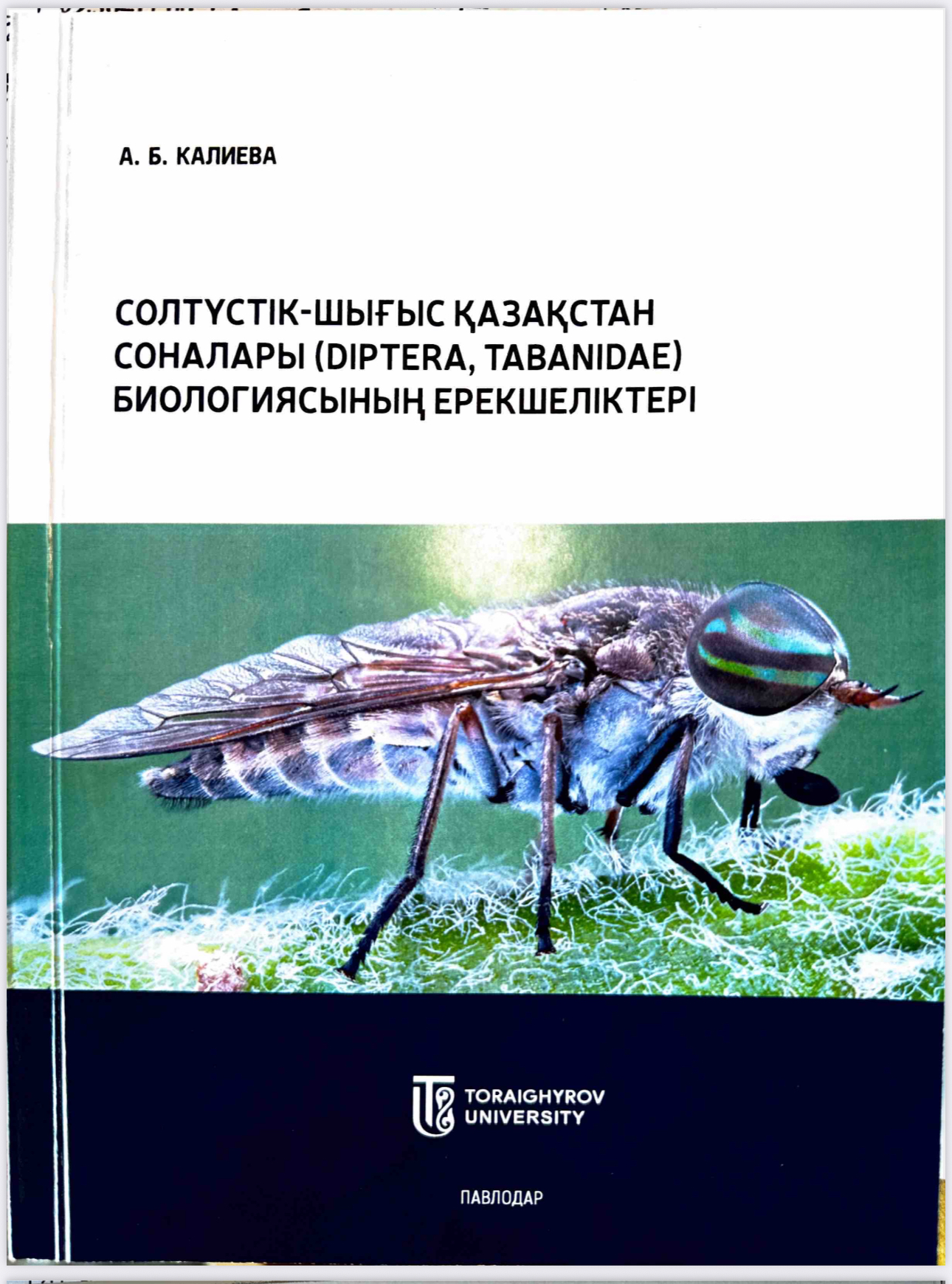
Monograph title: BIOLOGICAL FEATURES OF HORSEFLIES (DIPTERA, TABANIDAE) IN NORTHEASTERN KAZAKHSTAN
Author: Kaliyeva Ainagul Balgauovna
ISBN 978-601-345-324-8
Brief Description: This monograph presents for the first time the complete species composition, landscape distribution, ecological characteristics, and economic significance of tabanids (Diptera, Tabanidae) for northeastern Kazakhstan (Pavlodar Region).
The first chapter provides a detailed analysis of the literature review on the state of research into the fauna, ecology, and biology of horseflies in the CIS, including Kazakhstan.
The issues of morphobiological characteristics of one of the most important components of blood–sucking diptera, horseflies, are highlighted in detail. An ecological and faunal review of horseflies in Northeastern Kazakhstan, and features of the development of preimaginal phases are presented. At the present stage of the development of biological science, bloodsucking diptera as ectoparasites are of interest as hematophages and carriers of pathogens of various infections and invasions of humans and animals (tularemia, anthrax, etc.).
The study of parasitic dipterans in Kazakhstan was conducted in three areas: ecology and fauna, determining their harmful significance, and developing scientific methods for combating them. Contributions to the study of the fauna of horseflies belong to such scientists as V. V. Shevchenko, K. V. Skufin, N. G. Olsufiev, V. A. Sinelshchikov, Zh. M. Isimbekov, O. N. Sazonova, V. I. Alifanov, S. D. Lavrov, and many others. An analysis of this literature has shown that the fauna of horseflies in the Republic is rich in its composition. Currently, 77 species and subspecies known from the Palearctic have been found on the territory of the Republic. They belong to 12 genera and subgenera.
The first detailed summary of horseflies in southeastern Kazakhstan was published by N. G. Olsufiev in 1937. This review provides information on the systematics and distribution of 48 species. This work served as a starting point for further study of the species composition, distribution, and ecology of horseflies in Kazakhstan.
Further research was focused on studying the composition and distribution of horseflies in certain regions of Kazakhstan. The works of Olsufiev N. G. and Bozhenko V. P., Olsufiev N. G., Olsufiev N. G. and Formozov A. N., Shevchenko V. V., Petrova E. F., Sahibzadaev K. S., Shakirzyanova M. S., Aybasov H. A. and Shakirzyanova M. S. significantly expanded the knowledge about the species composition of horseflies in some poorly studied areas of Kazakhstan.
In 1956, Shevchenko V. V. published a guide to the horseflies of Kazakhstan, which was a concise reference book on the geographical distribution of local species. The author provided a detailed summary of the fauna, conducted extensive research on the terminalia of females and their role in the systematics of horseflies, and clarified the peculiarities of geographical distribution and issues of fauna genesis, noting the ecological characteristics of horseflies.
The second chapter provides a detailed ecological and faunistic overview of horseflies in the study area, including the classification of horsefly breeding sites, the ecological classification of horseflies according to the habitat of their pre-imaginal stages of development, phenology, and seasonal population trends. As a result of the research, the species composition of horseflies in the Pavlodar region includes 35 species with subspecies belonging to six genera: Hybomitra (37 %), Tabanus (26 %), Chrysops (14 %), Haematopota (11 %), Atylotus (9 %), and Heptatoma (3 %). The species composition of horseflies in the studied region is heterogeneous and consists of various faunal groups belonging to the Boreasian, Mediterranean and Afroeurasian fauna types.
The middle reaches of the Irtysh River within the Pavlodar region belong to the Irtysh-Ob basin, and the natural and ecological conditions of a significant part of its territory are very similar to those of the Barabinskaya lowland, in particular, with an abundance of low-lying lakes and wetlands, birch groves, and diverse grass and feather grass steppes. It is quite natural for horseflies to settle in the biotopes of the Irtysh floodplain both to the north and to the south, which can actually be seen both in the middle reaches of the Irtysh (Kazakhstan) and in the lower reaches of this river. The species composition of horseflies in the middle reaches of the Irtysh is very similar to the fauna of Western Siberia.
The book is of interest to teachers, students, and master's degree students, as well as employees of medical, agricultural, and educational institutions.
Contents:
|
|
Introduction |
3 |
|
|
1 |
Literature review |
4 |
|
|
1.1 |
State of research on the fauna, ecology, and biology of horseflies |
4 |
|
|
1.2 |
Methods of combating horseflies |
23 |
|
|
1.3 |
The harmful significance of horseflies |
32 |
|
|
1.4 |
Physical and geographical characteristics of the study areas |
35 |
|
|
2 |
Species composition of horseflies in North-Eastern Kazakhstan and features of pre-imaginal stages development |
46 |
|
|
2.1 |
Research materials and methods |
46 |
|
|
2.2 |
Ecological and faunal review of horseflies of the Pavlodar Irtysh region |
47 |
|
|
2.3 |
Ecological features of horseflies in the Pavlodar Irtysh region |
73 |
|
|
|
Conclusions |
95 |
|
|
|
References |
97 |
|
|
|
Appendix A |
|
108 |
The full text of the monograph is available at the Beisembayev Library («Toraighyrov University» NJSC library), 64 Lomov Street, Pavlodar, Kazakhstan.
For purchase inquiries, please contact the Toraighyrov University Publishing House.
Contacts:
Phone: +7 (7182) 67-36-69 (ext. 1147)
E-mail: kereku@tou.edu.kz
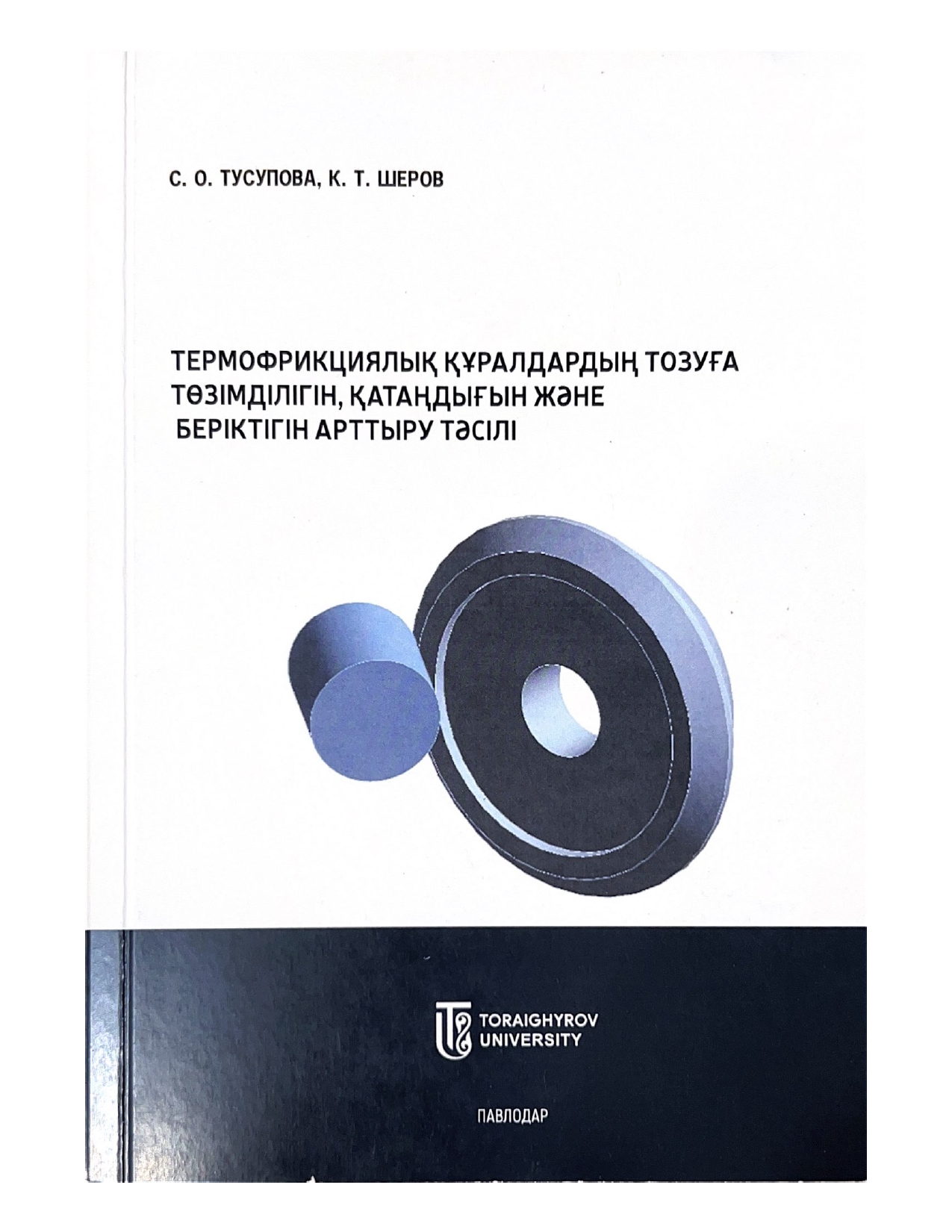
Monograph title: METHOD FOR INCREASING THE WEAR RESISTANCE, HARDNESS, AND STRENGTH OF THERMOFRICTION TOOLS
Authors: Sayagul Oralovna Tussupova, Karibek Tagayevich Sherov
ISBN 978-601-345-287-6
Brief Description: The monograph considers the hardfacing method for increasing the wear resistance, stiffness (rigidity/hardness), and strength of thermofriction tools, and also presents a complete analysis and comparison of hardfaced thermofriction cutting tools with traditional thermofriction tools.
The first chapter examined the efficiency of the cutting tool during the machining of high-hardness materials – one of the key problems in mechanical engineering production – and a full analysis of the general workability and wear structure of metal-cutting tools was also provided. The necessity of creating new processing methods that fully ensure the currently required accuracy and quality was identified. Thermofriction processing (TFP) was proposed and comprehensively described as one of the progressive methods. A detailed analysis of Thermofriction Processing (TFP) methods, especially the low-speed TFP technology with pulsed cooling, was conducted, and its effectiveness in ensuring high productivity and quality of the machined surface was confirmed. However, the main drawback when applying this progressive method is the insufficient wear resistance, hardness, and strength of the cutting parts of thermofriction tools. This problem arises due to the high frequency of recurring thermal cycles. To solve this problem, four directions for increasing the service life of thermofriction tools were determined. Among them, the method of strengthening the cutting part of the tool by hardfacing with wear-resistant materials was chosen as the most effective direction. Based on the analysis of various hardfacing materials, ESAB materials of grades STOODY M7-G, STOODY 102-G, OK TUBRODUR 53, and OK TUBRODUR 58 O/G M were selected, which are capable of withstanding severe thermodynamic conditions and possess high hardness (48–66 HRC) and wear resistance. Simple and widely used electric arc welding was chosen as the hardfacing method.
In the second chapter, the hardfacing method was fully considered, and research work was carried out. After hardfacing the indicated materials onto samples, the change in their initial hardness was studied, and a metallographic study of the quality of the hardfaced layers was conducted. The research results showed the high quality of the hardfacing, which confirms the correctness of the selected hardfacing regimes, hardfacing methods, as well as the equipping with instrumental, technological equipment and tooling.
The third chapter of the monograph is dedicated to the complex study and practical implementation of the method for improving the operational characteristics of thermofriction cutting tools by hardfacing with wear-resistant materials. Using the method of experimental design (full factorial experiment), the optimal regimes of the hardfacing process were determined. To strengthen the cutting part of the tools, the STOODY M7-G alloy, which has high hardness (58–66 HRC), was selected, and according to the experimental data obtained, it was established that hardfacing in two layers is the optimal quantity; the hardfacing was carried out by electric arc welding. To evaluate the effectiveness of the hardfaced tools, pilot-experimental and production tests were conducted. Laboratory tests proved that hardfacing with STOODY M7-G material increases the wear resistance of the disk saw by 1.5–2 times compared to a tool without hardfacing. High-quality indicators were also achieved during milling with a conical milling cutter, and optimal cutting regimes were determined. In conclusion, for the purpose of checking the quality of the hardfaced layers, the magnetic particle method of non-destructive testing was applied, which confirmed the absence of defects on the surface of the hardfaced tools.
The fourth chapter is dedicated to the study of thermal phenomena and the stress-strain state during machining with hardfaced thermofriction tools. For this purpose, numerical modeling using the Finite Element Method (FEM) (DEFORM-3D and Explicit-Dynamic ANSYS) and analytical calculations were performed. The conducted investigations confirmed the thermo-frictional nature of thermofriction processing, revealed the character of complex thermomechanical processes in the chip formation zone, and also showed the significant influence of the instrument's geometric parameters and cutting regimes on the formation of the temperature field. In conclusion, the numerical and analytical studies scientifically substantiated the optimal thermal regime for the operation of hardfaced thermofriction tools, which ensures their high wear resistance, strength, and the high quality of the processed surface, all proven in practice.
The monograph is intended for engineering and scientific staff, doctoral students, as well as students and master's degree candidates studying the specialty "Mechanical Engineering," who are involved in the development, research, and practical application of various methods for improving the wear resistance, hardness, and strength of cutting tools.
Contents:
|
Introduction |
3 |
|
|
1 |
Description of Thermofriction Processing Technology |
5 |
|
1.1 |
General Workability of Metal-Cutting Tools |
5 |
|
1.2 |
The Importance of Developing Thermofriction Processing Technologies |
11 |
|
1.3 |
Wear of Thermofriction Cutting Tools |
15 |
|
1.4 |
Existing Hardfacing Methods for Improving the Wear Resistance, Hardness, and Strength of Thermofriction Tools |
21 |
|
2 |
Features of Hardfaced Layers During Strengthening with Various Hardfacing Materials |
34 |
|
2.1 |
Hardness of Hardfaced Layers During Hardfacing with Various Hardfacing Materials |
34 |
|
2.2 |
Metallographic Study of the Quality of Hardfaced Layers Applied with Various Hardfacing Materials |
48 |
|
3 |
Results of Hardfacing and Experimental Testing of Thermofriction Tools |
58 |
|
3.1 |
Optimal Parameters for the Hardfacing Regime Using the Method of Experimental Design |
58 |
|
3.2 |
Hardfacing and Mechanical Machining of Thermofriction Tools |
63 |
|
3.3 |
Testing of Hardfaced Thermofriction Tools |
75 |
|
3.4 |
Non-Destructive Testing of the Conical Friction Milling Cutter and the Cup Cutter |
88 |
|
4 |
Thermal Phenomena and Stress-Strain State During Machining with Hardfaced Thermofriction Tools |
91 |
|
4.1 |
Investigation of Temperature Distribution and Stress-Strain State in the Cutting Zone During Rotational-Friction Enlargement Drilling using the Finite Element Method |
91 |
|
4.2 |
Modeling the Thermal State of the Workpiece's Surface Layer during Thermofriction Milling-Turning |
97 |
|
4.3 |
Mathematical Modeling of Thermal Processes during Machining of Hardfaced Surfaces |
107 |
|
4.4 |
Analytical Calculation of the Stress State of a Disc of Constant Thickness with a Central Hole |
114 |
|
4.5 |
Methodology for Calculating the Strength of a Disc of Constant Thickness with a Central Hole using the Finite Element Method |
118 |
|
Conclusion |
132 |
|
|
References (or Bibliography) |
133 |
|
|
Appendix A |
145 |
|
|
Appendix B |
146 |
The full text of the monograph is available at the Beisembayev Library («Toraighyrov University» NJSC library), 64 Lomov Street, Pavlodar, Kazakhstan.
For purchase inquiries, please contact the Toraighyrov University Publishing House.
Contacts:
Phone: +7 (7182) 67-36-69 (ext. 1147)
E-mail: kereku@tou.edu.kz
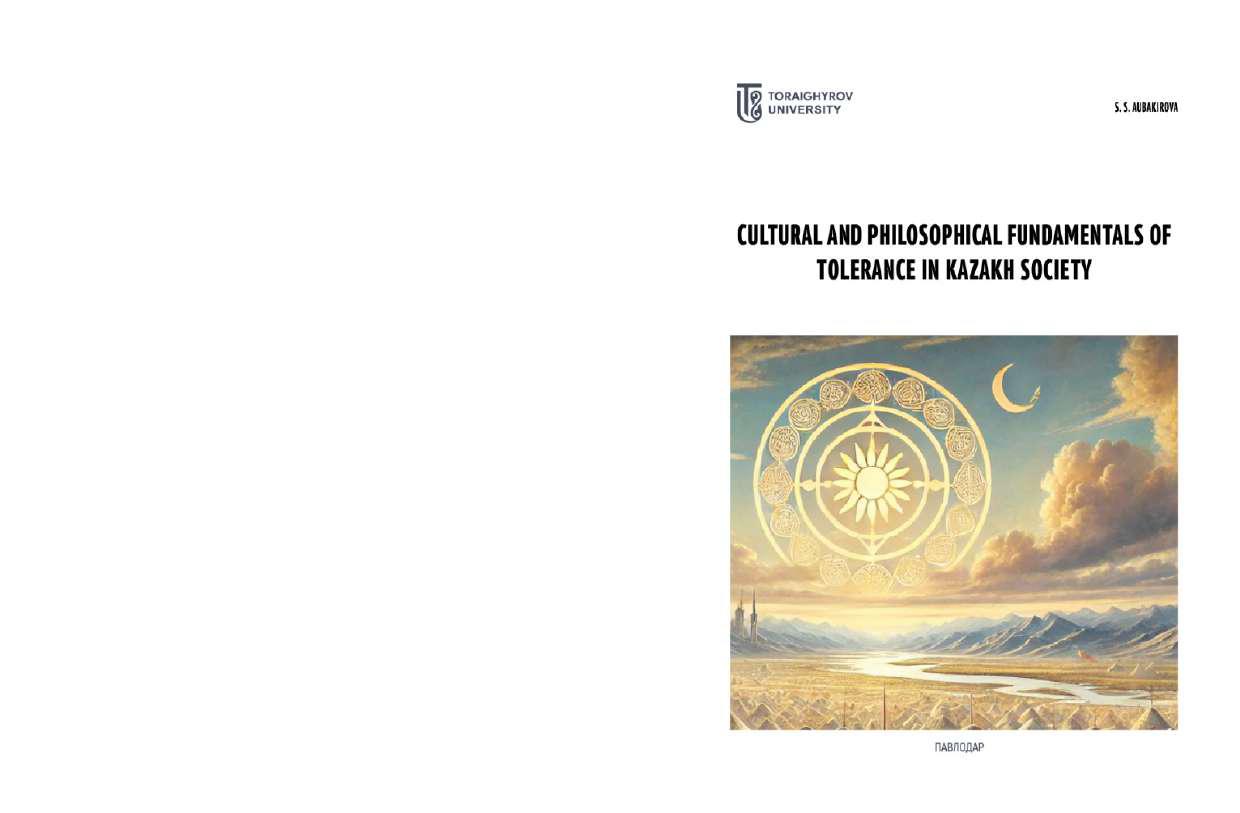
Monograph title: CULTURAL AND PHILOSOPHICAL FUNDAMENTALS OF TOLERANCE IN KAZAKH SOCIETY
Author: Aubakirova Saltanat Sovetovna
ISBN 978-601-345-619-5
Brief Description: This monograph is devoted to a comprehensive philosophical, theoretical and methodological analysis of the phenomenon of tolerance in the context of modern society and the specifics of Kazakhstan's sociocultural reality. The work is structured according to the logic of an in-depth study of the problem: from theoretical foundations and conceptual frameworks to an analysis of national characteristics, models of tolerance and their manifestations in various social spheres.
The first chapter examines philosophical, methodological, and conceptual approaches to the study of tolerance. Key categories are analyzed, and the concept of "tolerance" is explored from the perspective of various scholarly traditions. Particular attention is paid to socio-philosophical concepts that demonstrate the historical and cultural specificity of understanding tolerance in traditional culture. A lexical and semantic study of the term reveals deep layers of meaning and the specifics of its interpretation. The chapter concludes with a discussion of the types and models of tolerance operating in modern society.
The second chapter analyzes the phenomenon of tolerance in Kazakhstan. Particular attention is paid to the social context in which the strategy of tolerance is being shaped as a national and cultural priority. Issues of interethnic tolerance, its institutional mechanisms, risks and development potential are examined. A separate section is devoted to gender tolerance, which is viewed as an important indicator of societal modernization, strengthening human rights and harmonizing social relations.
This monograph will be of significant interest to specialists in philosophy, cultural studies, sociology and political science, as well as practitioners working in the fields of interethnic relations, education and public policy. The work offers theoretical depth while simultaneously addressing pressing social issues.
Contents:
|
|
Introduction |
3 |
|
1 |
Philosophical and theoretical-methodological fundamentals of studying the tolerance issue |
9 |
|
1.1 |
Philosophical, methodological and conceptual approaches to study the tolerance |
9 |
|
1.2 |
The tolerance issue in Kazakh socio-philosophical concepts |
29 |
|
1.3 |
Lexical-semantic analysis of the term tolerance |
46 |
|
1.4 |
Identifying types and models of tolerance in society |
57 |
|
2 |
The tolerance issue in Kazakhstan |
62 |
|
2.1 |
The social situation of the formation strategy of tolerance in Kazakhstan |
62 |
|
2.2 |
The interethnic tolerance issue in Kazakhstan |
74 |
|
2.3 |
Gender tolerance |
102 |
|
|
Conclusions |
114 |
|
|
References |
116 |
|
|
Application A |
128 |
The full text of the monograph is available at the Beisembayev Library («Toraighyrov University» NJSC library), 64 Lomov Street, Pavlodar, Kazakhstan.
For purchase inquiries, please contact the Toraighyrov University Publishing House.
Contacts:
Phone: +7 (7182) 67-36-69 (ext. 1147)
E-mail: kereku@tou.edu.kz
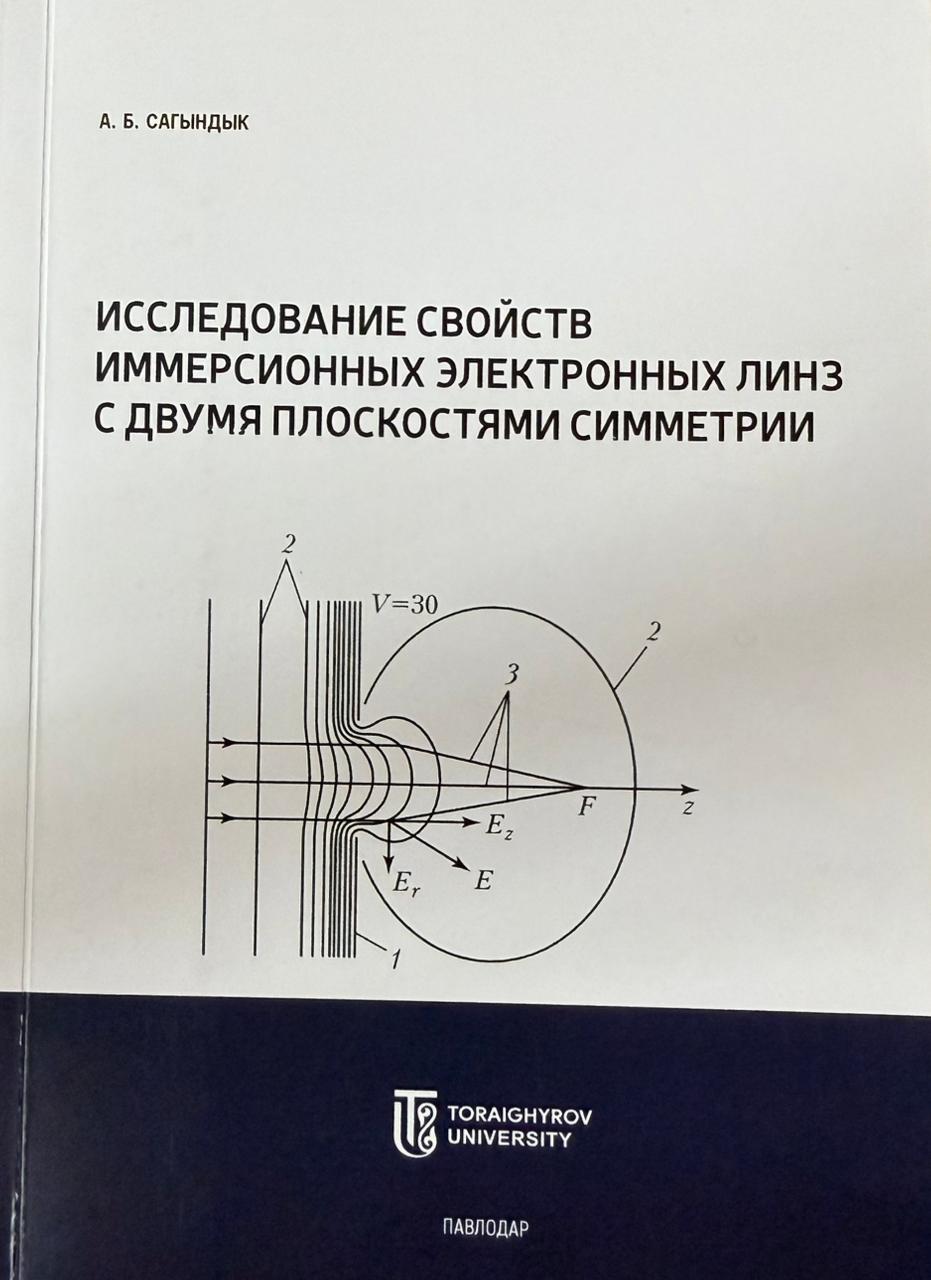
Monograph title: RESEARCH ON THE PROPERTIES OF ELECTRONIC IMMERSION LENSES WITH TWO SYMMETRY PLANES
Author: Sagyndyk Aigerim Bekenkyzy
ISBN 978-601-345-341-5
Brief Description: The monograph is devoted to the theoretical and practical investigation of the properties of new emission immersion electron lenses with two symmetry planes. New emission electron-optical elements of vacuum electronics with improved focusing characteristics are proposed.
In the first chapter, a review of scientific works on the study of electronic lenses is performed.
The modeling of fields and the calculation of the potential distribution of the electrostatic lenses with two symmetry planes are considered in the second chapter of the thesis.
In the third chapter, algorithms and software for numerical studies of emission elements with two symmetry planes in Delphi programming language are developed. A technique for calculating paraxial parameters with a focusing condition in the region of a given point of space is considered. Numerical studies of paraxial parameters are carried out.
The fourth chapter compares the focusing parameters of a box-shaped lens with a square cross-section and an axisymmetric lens. In this chapter it is shown that for the box emulsion immersion lens under consideration, a number of aberration coefficients, along the x axis, have noticeably lower values compared to aberrations of the other direction. In this case, the aberrations of the «у» direction are approximately equal to the aberrations of axisymmetric emission lenses. Thus, it is shown that emission lenses with two symmetry planes allow the construction of sources of charged particles with improved focusing characteristics.
Relevance of the research topic. Electron-optical elements of vacuum electronics are currently widely used for the construction of various electronic devices and process units. For example, such elements are used in electron microscopes, mass spectrometric devices, microwave electronics devices, as well as in electron-lithographic and ion-lithographic installations of nano and micro electronic technologies.
The most important elements of most devices are the immersion lenses. The technical characteristics of electron-optical and ion-beam instruments and devices mainly depend on the quality of focusing of the immersion lenses, since it is carried out the start of process of the formation of a beam of charged particles.
Classical methods for the research on the electronic lenses are not suitable for the development of the theory of immersion lenses because they do not take into account the specificity of their initial conditions. The creation of an effective theory of immersion objectives has for a long time been hampered by difficulties of a mathematical nature associated with the vanishing of the potential on the cathode surface, as well as with large slopes of trajectories in the vicinity of a surface with zero potential.
On the basis of an analysis of the current state and problems of improving electronic devices, it can be concluded that in vacuum electronics, the development of new types of immersion lenses is very relevant. At the same time, the improvement of the focusing properties of electron-optical elements makes it possible to obtain improved technical and operational characteristics in electron-optical and ion-beam devices and technological devices. Therefore, the investigation on the electron-optical parameters and characteristics of new elements of vacuum electronics are an actual task of electronic instrumentation.
Content
|
|
Introduction |
3 |
|
1 |
Review of Conducted Research on Electron Lenses |
6 |
|
1.1 |
Definitions of the research area |
6 |
|
1.2 |
Review of the studied lenses with different designs |
11 |
|
1.3 |
Methods of correcting aberrations in electrostatic lenses |
14 |
|
1.4 |
Justification for the choice of the current study and statement of the problem |
26 |
|
2 |
Methods for calculating fields for electrostatic lenses with two planes of symmetry |
30 |
|
2.1 |
Modeling and calculation of fields in a box-shaped emission immersion lens |
30 |
|
2.2 |
Methodology for calculating the electrostatic field of axisymmetric and quasi-axisymmetric emission immersion lenses |
48 |
|
3 |
Development and calculation of paraxial parameters with focusing condition |
59 |
|
3.1 |
Algorithmic basis for calculating the lens under study |
59 |
|
3.2 |
Numerical method for solving a system of ordinary differential equations for calculating paraxial parameters |
69 |
|
4 |
Numerical calculations of aberration characteristics of an emission immersion lens |
78 |
|
4.1 |
Formulas for numerical studies of aberration characteristics |
78 |
|
4.2 |
Results of calculations of aberration coefficients of a box immersion lens |
91 |
|
|
Conclusion |
104 |
|
|
Literature |
106 |
The full text of the monograph is available at the Beisembayev Library («Toraighyrov University» NJSC library), 64 Lomov Street, Pavlodar, Kazakhstan.
For purchase inquiries, please contact the Toraighyrov University Publishing House.
Contacts:
Phone: +7 (7182) 67-36-69 (ext. 1147)
E-mail: kereku@tou.edu.kz
Monograph title: PROSPECTS FOR SUSTAINABLE SOCIO-ECONOMIC DEVELOPMENT OF THE REGION
Author: Madina Kudaibergenovna Karimbergenova
ISBN 978-601-345-338-5
Brief Description: The monograph presents the results of research devoted to the development of modern approaches to ensuring the sustainable development of regional systems in conditions of increasing anthropogenic pressure on the environment, as well as a comprehensive assessment of socio-economic factors affecting the effectiveness of regional development management.
The first chapter provides a literature review aimed at summarising the theoretical and methodological foundations of sustainable regional development, including an analysis of key scientific concepts, factors and mechanisms that determine the socio-economic and environmental sustainability of territories. It is noted that:
1. The interdependence of the environmental, economic and social components of sustainable development shapes the overall trajectory at each stage of the economic system's evolution. At the same time, the rapid intensification of the introduction of scientific and technological progress has triggered accelerated economic growth, resulting in increased environmental risks and negative impacts on the environment. A study of contemporary global and domestic approaches to understanding sustainable development shows the need to consider it as an integral system that unites people, society and nature.
2. Research into the theory of sustainable development highlights a number of fundamental postulates, expressed in the following principles: ensuring balanced economic growth, harmonising economic development and the social sphere, and the principle of intergenerational equity.
3. It has been researched and determined that the organisational and economic mechanism acts as a fundamental tool in the regional management system. This mechanism implements a structured combination of social, economic and environmental factors, under the administrative and regulatory influence of state structures. Its task is to ensure the synergistic interconnection of these components in order to achieve target indicators that ensure the stability of regional development.
4. A review of research by both international and domestic scientists revealed the absence of a universal methodology for assessing the sustainability of regional systems, including a comprehensive analysis and consideration of social, economic and environmental factors, which necessitated the development of integrated approaches to assessing the sustainability of regional systems.
In the second chapter, when studying approaches to assessing sustainability, an approach was chosen to assess sustainability by calculating an integral generalised, aggregated indicator of the level of sustainable development in the region. The integral indicator for determining the level of sustainable development in the region includes indicators of socio-economic development in the region. The study proposes to include indicators reflecting the state of the environment in the integrated indicator. The integral indicator for assessing sustainable development is determined by the product of the indices of change in the individual criteria of a set of economic (Кэ), social (Кс) and environmental (Кэк) indicators. The following social indicators have been identified: unemployment rate; net migration; total floor space of residential buildings commissioned; deaths from all causes; average monthly wage; life expectancy at birth; infant mortality by main causes of death; ratio of income spent on consumption to the subsistence minimum; subsistence minimum per capita; volume of health care and education services. The following economic indicators have been identified: GRP per capita; index of physical volume of industrial production; index of physical volume of agricultural production; investment in fixed capital; retail trade turnover; degree of wear and tear of fixed assets; profit in the economy. The following environmental indicators have been identified: current environmental protection costs; emissions of the most common atmospheric pollutants from stationary sources; utilisation of pollutants captured by treatment plants.
As part of the study, based on the indicators selected for each component of sustainability, an analysis of the sustainability of the Pavlodar region was carried out using an improved integral indicator as part of a sustainability rating assessment and comparison with other regions of Kazakhstan.
In the third chapter, based on a comprehensive analysis, strategic directions and tools for achieving regional sustainability are developed. Key recommendations: formation of a new institutional framework; development of human capital in the field of environmental management and protection; stimulating technological transformation; improving management mechanisms; implementing standards.
The monograph is intended for doctoral students, master's students and specialists engaged in research in the field of regional economics, sustainable development theory, environmental management, as well as for government agencies involved in strategic planning.
Contents:
|
|
Introduction |
3 |
|
1 |
Theoretical and methodological foundations of sustainable regional development |
8 |
|
1.1 |
The essence of the concept of «sustainable development» in theoretical terms |
8 |
|
1.2 |
Sustainable development management at the regional level |
15 |
|
1.3 |
The concept and characteristics of the organisational and economic mechanism in the concept of sustainable development |
33 |
|
1.4 |
International experience in achieving sustainable development |
42 |
|
2 |
Assessment of sustainable development in Pavlodar Region |
57 |
|
2.1 |
Analysis of socio-economic development indicators and the environmental status of Pavlodar Region |
57 |
|
2.2 |
Determining the level of sustainable development in Pavlodar Region in the context of Kazakhstan's industrial regions |
72 |
|
2.3 |
Assessment of the functioning organisational and economic mechanism for sustainable development in Pavlodar Region |
75 |
|
3 |
Main directions for the formation of an organisational and economic mechanism for sustainable development in the pavlodar region |
87 |
|
3.1 |
Strategic management of sustainable development in the region |
87 |
|
3.2 |
Organisation of environmental governance and environmental management in the region |
103 |
|
|
Conclusions |
116 |
|
|
References |
121 |
The full text of the monograph is available at the Beisembayev Library («Toraighyrov University» NJSC library), 64 Lomov Street, Pavlodar, Kazakhstan.
For purchase inquiries, please contact the Toraighyrov University Publishing House.
Contacts:
Phone: +7 (7182) 67-36-69 (ext. 1147)
E-mail: kereku@tou.edu.kz
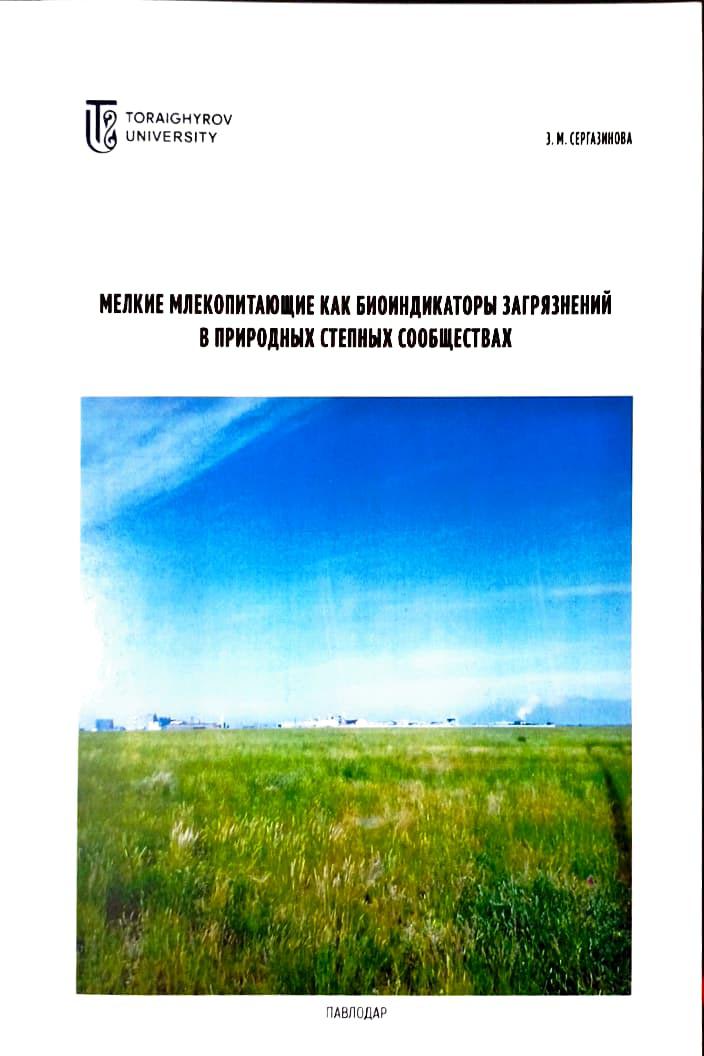
Title of monograph: SMALL MAMMALS AS BIOINDICATORS OF POLLUTION IN NATURAL STEPPE COMMUNITIES
Author: Sergazinova Zarina Mukhtarovna
ISBN 978-601-345-381-1
Brief description: The monograph is devoted to a comprehensive study of small mammals as bioindicators of pollution in natural steppe ecosystems in Northern Kazakhstan. The work presents the results of many years of monitoring observations carried out in areas affected by the technogenic impact of large aluminium enterprises JSC Aluminium of Kazakhstan and JSC Kazakhstan Electrolysis Plant (Pavlodar). The monograph examines the characteristics of the fauna of small mammals in steppe communities, their distribution depending on the level of technogenic load, the structure of dominance and changes in population indicators. Particular attention is paid to the accumulation of fluorine in the bone tissue of dominant species and the morphophysiological reactions of animals as an indicator of chronic toxic impact.
The first chapter contains a comprehensive analysis of scientific works on bioindication and ecological monitoring involving small mammals. The indicators used in bioindication are considered: abundance, community structure, sex composition, morphophysiological indices, and pollutant accumulation levels. Examples of changes in rodent populations under the influence of fluorides, heavy metals, sulphur compounds and radionuclides are shown. A review of studies in metallurgical and radiation-contaminated areas of Kazakhstan and Russia has been carried out. The criteria for selecting bioindicators are summarised and a comparative characterisation of the reactions of different species to anthropogenic impact is provided.
The second chapter includes a description of the natural conditions of the Pavlodar region: geographical location, relief, climatic features, hydrological regime, soil cover, vegetation and fauna. The diversity of landscapes is shown, ranging from forest-steppes to dry steppes and sandy massifs. Data on the sharply continental climate, precipitation distribution and wind regime are provided. The recreational and wetland biotopes of the Irtysh floodplain, where key habitats for small mammals are formed, are described. Attention is paid to the characteristics of soils that affect the migration and accumulation of fluorine and other elements.
The third chapter describes the studied technogenic zones formed by emissions from Aluminium of Kazakhstan JSC and Kazakhstan Electrolysis Plant JSC. Methods for counting and catching small mammals are presented, including a description of trapping channels, habitat selection criteria, and seasonality of work. The methods of morphological and biochemical processing of material, preparation of bone tissue, determination of fluorine in soil and biosubstrates according to GOST standards, as well as methods of statistical data processing are described in detail. Schemes for the distribution of sites according to levels of technogenic load are described: impact, buffer and control areas.
The fourth chapter includes an analysis of the species diversity of small mammals in the steppe communities of Northern Kazakhstan. A new species, the Eastern European vole (Microtus levis), has been identified for the first time in the region. Faunal complexes, their dynamics and the varying resistance of different species to technogenic loads are considered. Changes in population structure, abundance, reproductive indicators and species dominance depending on distance from emission sources are shown. The results of fluorine determination in soil and animal bone tissue are presented, and spatial accumulation gradients are identified. The morphophysiological reactions of animals ( ) to chronic toxic effects are shown: changes in organ indices, increased asymmetry, and deviations in the size of blood-forming organs. A comparison of control and contaminated sites was carried out, and the mechanisms of population adaptation and changes in the trophic structures of communities were interpreted.
The monograph contains detailed methods for recording, processing and laboratory analysis of samples, including the determination of fluorine in soil and biological tissues, making it a practical tool for ecologists, biologists, toxicologists and environmental protection specialists.
The research materials allow for an objective assessment of the transformation of ecosystems under the influence of anthropogenic factors and the formation of scientifically sound recommendations for monitoring and protecting natural areas.
The monograph is intended for doctoral students, master's students, research staff, hygienists, practicing ecologists, and employees of environmental organizations.
Contents:
|
REGULATORY REFERENCES |
4 |
|
|
DEFINITIONS |
5 |
|
|
INTRODUCTION |
7 |
|
|
1 LITERATURE REVIEW |
12 |
|
|
2 PHYSICAL AND GEOGRAPHICAL CHARACTERISTICS OF THE STUDY AREA |
18 |
|
|
2.1 |
Geographical location |
18 |
|
2.2 |
Relief and geological structure |
18 |
|
2.3 |
Climate |
19 |
|
2.4 |
Hydrology |
20 |
|
2.5 |
Soils and soil cover |
22 |
|
2.6 |
Flora |
23 |
|
2.7 |
Fauna |
25 |
|
3 MATERIALS AND METHODS |
28 |
|
|
3.1 |
Characteristics of emission sources at Aluminium of Kazakhstan JSC and Kazakhstan Electrolysis Plant JSC |
28 |
|
3.2 |
Small mammal trapping sites |
30 |
|
3 |
Methods of recording and trapping, materials |
33 |
|
3. |
Methods of processing captured animals |
33 |
|
3. |
Method for determining fluoride in soil and bone tissue of small rodents |
34 |
|
3.6 |
Statistical methods for processing materials |
37 |
|
4 RESULTS AND DISCUSSION |
39 |
|
|
4.1 |
Characteristics of the small mammal fauna of steppe communities in Northern Kazakhstan |
39 |
|
4.1.1 |
List of small mammals of the steppes of Northern Kazakhstan. |
39 |
|
4.1.2 |
Faunal complexes of small mammals of the steppes of Northern Kazakhstan and the northern Kulundinskaya Plain. |
41 |
|
4.1.3 |
Species overview of small mammals and their distribution by biotopes and areas of technogenic load |
45 |
|
4 |
Population of small mammals in areas of technogenic load from aluminium production |
61 |
|
4.2.1 |
Characteristics of small mammal populations in areas of man-made stress and the control territory |
61 |
|
4. |
Distribution of small mammals by areas of anthropogenic impact |
62 |
|
4 |
Assessment of the impact of aluminium industry emissions on vertebrates |
71 |
|
4.3.1 |
Fluoride accumulation in the bone tissue of dominant small mammal species in areas affected by aluminium production |
71 |
|
4.3.2 |
Interpopulation morphological variability of the narrow-skulled vole in technogenic and control areas. |
81 |
|
CONCLUSION |
85 |
|
|
LIST OF REFERENCES |
88 |
|
|
APPENDIX A – Trapping ditches with catch |
104 |
|
|
APPENDIX B – Preparation of rodent bone tissue samples |
111 |
|
|
APPENDIX C – Determination of fluoride ions in rodent bone tissue samples |
112 |
|
The full text of the monograph is available at the Beisembayev Library («Toraighyrov University» NJSC library), 64 Lomov Street, Pavlodar, Kazakhstan.
For purchase inquiries, please contact the Toraighyrov University Publishing House.
Contacts: Phone: +7 (7182) 67-36-69 (ext. 1147)
E-mail: kereku@tou.edu.kz
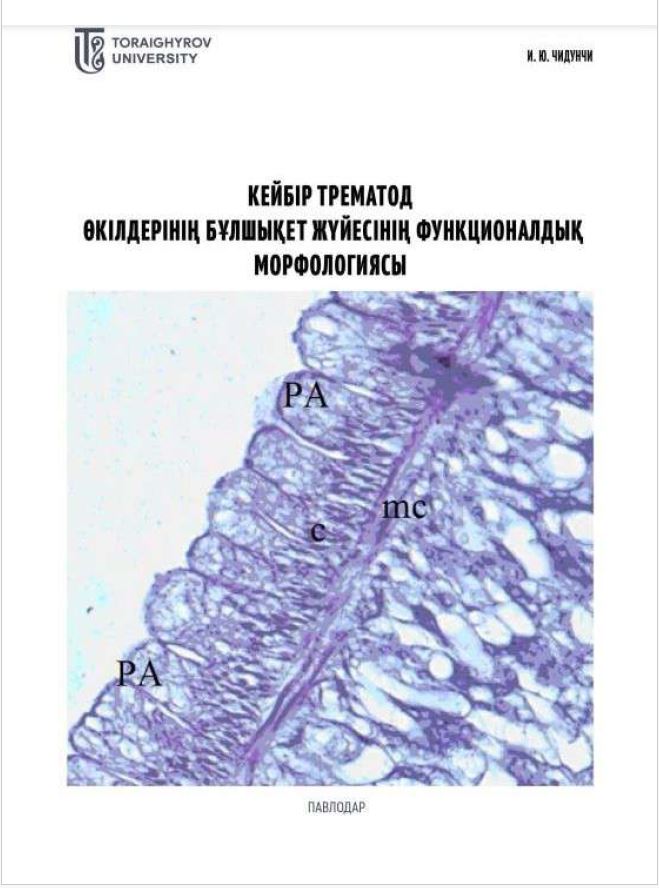
Monograph title: FUNCTIONAL MORPHOLOGY OF THE MUSCULAR SYSTEM OF SOME TREMATODE REPRESENTATIVES
Author: Chidunchi Irina Yuryevna
ISBN 978-601-345-586-0
Brief Description: The monograph presents the results of a comprehensive study of the anatomy, morphology, ultrastructure, and functional features of the muscular system in certain representatives of the type Plathelminthes and the class Trematoda. The work is aimed at identifying the structural organization of trematode body muscles, mechanisms of their adaptation to a parasitic lifestyle, as well as changes in the muscular apparatus at different stages of the life cycle – from larvae to adult specimens. The obtained data allow for an in-depth understanding of the morphophysiological features of parasitic flatworms and have significant scientific value for helminthology, parasitology, and comparative morphology.
The first chapter addresses the general anatomical and morphological organization of the body muscles in representatives of Plathelminthes and Trematoda. It provides a description of the layers of the integumentary-muscular sac – circular, longitudinal, and diagonal-as well as the arrangement of parenchymal muscle fibers. Special attention is given to the relationship between the tegument and muscle structures, the structure of suckers, the peculiarities of their mechanical function, and morphological changes associated with parasitism.
The second chapter is devoted to the comparative-anatomical, evolutionary, and functional aspects of the muscular system of flatworms. It illustrates the sequence of morphological transformations from free-living to parasitic forms and analyzes progressive and regressive traits arising from changes in habitat.
The third chapter describes the characteristics of the cercariae muscular system, the restructuring of muscle structures during metacercariogenesis, and the ultrastructural features of larval stages. The mechanisms of larval movement, their environmental adaptations, and the biological roles of these structures are examined.
The fourth chapter presents the materials and methods of research, including brief descriptions of the life cycles of the studied species – Prosthogonimus cuneatus, Schistogonimus rarus, Typhlocoelium cucumerinum, Diplostomum huronense their hosts, localization, and the applied morphological, histological, and electron microscopy approaches.
Subsequent chapters provide a detailed examination of the fine morphology and ultrastructure of the body muscles of each studied species. Descriptions are given of the spatial organization of circular, longitudinal, and diagonal muscle fibers, the features of suckers, attachment apparatuses, and parenchymal muscles. Specific adaptations of the muscular system are highlighted for each species, related to their localization within the host organism and their parasitic ecology.
A separate chapter addresses regressive changes in the trematode muscular system associated with parasitism. Reduction of individual muscle elements, specialization of suckers, changes resulting from limited mobility, and environmental conditions are described. The role of the basal layer of the integumentary-muscular sac as a mechanical and protective barrier is examined in detail.
In the chapter on functional morphology, the motile and anchoring functions of trematode muscles, the mechanics of sucker function, movement within the host, and the involvement of the muscular system in life cycle implementation are analyzed. Ultrastructural characteristics of muscle fibers and their relationship with energy metabolism and adaptation to a parasitic lifestyle are presented.
The obtained results provide a deep understanding of trematode adaptive mechanisms, clarify the morphological characteristics of their muscular system, and expand the possibilities for morphological studies of parasitic organisms. The monograph is intended for students, master’s and doctoral students, as well as specialists in parasitology, zoology, and veterinary sciences.
Contents:
|
|
Introduction |
3 |
|
1 |
Anatomy, morphology, and functions of the body musculature of the phylum Plathelminthes and the class Trematoda |
6 |
|
1.1 |
Muscular system of flatworms |
7 |
|
1.2 |
Specific features of cercarial musculature and metacercariogenesis |
27 |
|
2 |
Materials and Methods |
34 |
|
3 |
Brief description of the life cycles of the organisms examined in the study |
37 |
|
3.1 |
Prosthogonimus cuneatus (Rudolphi, 1809) |
37 |
|
3.2 |
Schistogonimus rarus (Braun,1901) |
38 |
|
3.3 |
Typhlocoelium cucumerinum (Rudolphi, 1809) |
39 |
|
3.4 |
Diplostomum huronense (La rue,1927) |
40 |
|
4 |
Fine Morphology and Ultrastructure of Trematode Body Muscles |
42 |
|
4.1 |
Ultrastructure of the body muscles of Prosthogonimus cuneatus (Rudolphi, 1809) |
42 |
|
4.2 |
Ultrastructure of the body muscles of Schistogonimus rarus (Braun, 1901) |
48 |
|
4.3 |
Fine morphology and ultrastructure of the body muscles of Typhlocoelium cucumerinum (Rudolphi, 1809) |
60 |
|
4.4 |
Ultrastructure of the body muscles of Diplostomum huronense (La Rue, 1927) |
79 |
|
5 |
Muscular System of Trematodes in the Context of Regressive Changes in Parasitic Organisms |
86 |
|
5.1 |
Analysis of the ultrastructural role of the basal lamina of the tegument-muscular sac |
88 |
|
5.2 |
Functional morphology of the trematode muscular system |
91 |
|
5.2.1 |
Ultrastructural features of trematode muscle fibers |
91 |
|
5.2.2 |
Adaptive-functional characteristics of the tegument-muscular layer in the studied trematodes |
94 |
|
|
Conclusion |
97 |
|
|
References |
99 |
The full text of the monograph is available at the Beisembayev Library («Toraighyrov University» NJSC library), 64 Lomov Street, Pavlodar, Kazakhstan.
For purchase inquiries, please contact the Toraighyrov University Publishing House.
Contacts:
Phone: +7 (7182) 67-36-69 (ext. 1147)
E-mail: kereku@tou.edu.kz
Monograph title: PEDAGOGICAL CONDITIONS FOR ORGANIZING STUDENTS’ INDEPENDENT WORK IN THE PROCESS OF ENHANCING THEIR INTELLECTUAL POTENTIAL
Author: Nurgalieyva Murshida Elubaevna
ISBN 978-601-345-432-0
Brief description: The monograph is devoted to a relevant issue – the organization of independent work of higher education students. It presents the theoretical foundations of organizing students’ independent work in the process of enhancing their intellectual potential. The essence and content of students’ independent work, which ensures the development of the intellectual potential of future specialists in the educational process, are revealed. The goal and structure of the factors influencing the process of increasing students’ intellectual potential are substantiated. A model for organizing independent work aimed at enhancing students’ intellectual potential is developed, as well as a methodology for improving students’ independent work, which has undergone experimental and practical verification.
The monograph is intended for university and college instructors, doctoral students, researchers in the field of education, practicing teachers, and others.
In the first chapter, the development of the content of higher education and its role in the effective organization of students’ independent work are examined. The renewal of educational content, the introduction of the competence-based approach, and the flexibility and adaptability of academic programs are analyzed as key factors influencing students’ intellectual development. Furthermore, the interrelation of theoretical and practical components of educational content is shown to ensure both personal and professional development of learners.
The analysis explores how the structure of educational material, its volume, conceptual depth, and requirements for mastery affect students’ independent learning activities. It is substantiated that the accessibility, systematicity, and logical coherence of educational content play a particularly important role in organizing independent work. As a result, students’ cognitive activity, abilities for analysis, inquiry, information processing, and application develop.
Methodological approaches and educational technologies aimed at enhancing students’ intellectual potential are examined. Based on psychological and pedagogical theories, the regularities of intellectual development and the characteristics of cognitive processes (thinking, attention, memory, reflection) are analyzed. Modern teaching methods – interactive learning, project-based activities, and research activities – are described as effective tools for students’ intellectual growth.
When determining methodological aspects, the guiding role of the instructor, differentiated learning tasks, and possibilities for forming individual learning trajectories are considered. A set of methods aimed at developing cognitive interest, strengthening learning motivation, and improving skills of applying knowledge is substantiated as an effective system for enhancing intellectual potential.
The philosophy and structure of the credit-based learning system and the requirements it imposes on students’ independent work are analyzed. Since the credit system is based on the principle of students’ independent academic activity, the volume, quality, and effectiveness of independent work become key indicators. From theoretical and methodological perspectives, the principles of academic freedom, modular learning, planning of academic workload, and the assessment of learning outcomes are discussed.
It is also substantiated that the credit technology aims to develop students’ skills of self-regulation, planning, time management, and conducting research. The advantages of the credit system – autonomy, responsibility, creative inquiry, and result-orientation – are described from a scientific and methodological point of view as important conditions for developing students’ intellectual potential.
The second chapter of the monograph reveals the content of pedagogical conditions that facilitate the development of students’ intellectual potential. The organization of the educational environment, motivational support, differentiated presentation of learning material, and stimulation of reflection are considered as conditions playing an important role in fostering students’ independent thinking. The system of pedagogical conditions contributes to the development of students’ interest in independent work and to the formation of their intellectual abilities.
These pedagogical conditions are also described through the lens of effective use of innovative technologies in the educational process, work with digital resources, and the establishment of partnership relations between students and instructors. Such conditions enhance the effectiveness of the educational process and promote students’ personal growth.
The structure of the developed theoretical model, its substantive components, and mechanisms of functioning are described. The model includes motivational, content-related, operational, and evaluative components aimed at developing students’ intellectual potential. The interrelation among these components and their role in improving students’ independent work are systematically outlined.
The model encompasses the stages of planning independent learning activities, performing cognitive tasks, processing information, and analyzing results. It is substantiated that the implementation of this model in the educational process contributes to increased cognitive activity, the development of intellectual abilities, and the formation of professional competencies.
Internal and external factors influencing the development of students’ independent work are analyzed. Internal factors include students’ motivation, interests, learning skills, and personal characteristics; external factors include the educational environment, the instructor’s leadership style, the content of the academic program, and the availability of information resources. The impact of each factor is described with scientific justification.
Additionally, modern trends such as digitalization, the development of educational technologies, and policies promoting academic freedom are considered as important prerequisites for improving students’ independent work. These factors directly contribute to enhancing the effectiveness of independent learning activities and increasing students’ intellectual potential.
The third chapter describes the diagnostic methods used at the initial stage of the research, the instruments applied, and the baseline data obtained. Diagnostics aimed to determine the initial level of students’ intellectual potential, their independent learning skills, cognitive activity, and academic motivation. The methods used included interviews, questionnaires, observation, testing, and analysis of students’ academic products.
The diagnostic results allow determining students’ readiness for independent work, the features of their intellectual development, and problematic areas of the learning process. These data serve as a basis for planning the subsequent stages of the experiment.
The content of the methodological system applied at the formative stage of the experiment is outlined. The methodology includes motivational, content-based, technological, and evaluative blocks, as well as a set of learning tasks, interactive methods, and digital resources aimed at developing students’ intellectual potential. The stages of planning, performing, and reflecting on independent work are presented through specific algorithms.
The methodology is aimed at activating students’ cognitive activity and developing skills of analysis, synthesis, comparison, and evaluation of information. The chapter describes the conditions for applying the methodology and possibilities for its integration into the educational process.
The results of the experimental work are presented through comparative analysis. The indicators of experimental and control groups, the dynamics of students’ intellectual potential development, and improvements in the quality of independent work are confirmed using statistical methods. The results are interpreted using diagrams, tables, and numerical data.
In conclusion, it is emphasized that the proposed pedagogical conditions and methodology have proven effective, and their practical value has been confirmed by the experiment. Recommendations for implementing the research results in higher education practice are also formulated.
Contents:
|
|
Preface |
3 |
|
1 |
Theoretical foundations of organizing students’ independent work in the process of enhancing their intellectual potential |
10 |
|
1.1 |
The pedagogical significance of educational content in organizing students’ independent work in higher education institutions |
10 |
|
1.2 |
Methodological aspects of the problem of enhancing students’ intellectual potential in higher education |
20 |
|
1.3 |
Theoretical and methodological foundations of organizing students’ independent work in the process of enhancing their intellectual potential under the credit-based learning system |
33 |
|
2 |
Development of pedagogical conditions for enhancing students’ intellectual potential in the process of organizing independent work |
48 |
|
2.1 |
Pedagogical conditions for organizing students’ independent work in the process of enhancing their intellectual potential |
48 |
|
2.2 |
Theoretical model of organizing students’ independent work in the process of enhancing their intellectual potential |
63 |
|
2.3 |
Factors influencing the development of students’ independent work in the modern educational process of higher education |
81 |
|
3 |
Practical and experimental work on organizing students’ independent work in the process of enhancing their intellectual potential |
90 |
|
3.1 |
Diagnostics of organizing students’ independent work in the process of enhancing their intellectual potential |
90 |
|
3.2 |
Methodology for developing students’ independent work in the process of enhancing their intellectual potential |
111 |
|
3.3 |
Results of the experiment and their interpretation |
125 |
|
|
Conclusion |
137 |
|
|
References |
140 |
The full text of the monograph is available at the Beisembayev Library («Toraighyrov University» NJSC library), 64 Lomov Street, Pavlodar, Kazakhstan.
For purchase inquiries, please contact the Toraighyrov University Publishing House.
Contacts:
Phone: +7 (7182) 67-36-69 (ext. 1147)
E-mail: kereku@tou.edu.kz
Monograph title: DEVELOPMENT OF PROTECTION OF ELECTRIC MOTORS ON REED SWITCHES
Author: Kaltayev Abdulla Gabdylmanapuly
ISBN 978-601-345-672-0
Brief Description: The monograph examines the theoretical and practical aspects of developing high-speed and highly reliable relay protection systems for electric motors based on reed switches – hermetically sealed magnetically operated contacts. The research addresses one of the pressing challenges in modern electrical power engineering: eliminating bulky and metal-intensive current transformers in protection circuits, which significantly improves reliability and reduces the overall mass of the devices.
A detailed analysis of existing protection methods for motors rated below and above 1000 V is provided, including traditional overcurrent, differential, and differential-phase protection schemes used in industrial facilities and power plants. Special attention is given to protection systems based on phase-current comparison and majority-logic schemes, which ensure higher tripping dependability and enable self-diagnostics. Based on the analysis of known solutions, several limitations have been identified – low sensitivity to turn-to-turn faults, lack of self-monitoring, structural complexity, and dependence on current transformer parameters.
The scientific novelty of the work lies in the development of new structural and functional principles for designing reed-switch-based motor protection systems characterized by high sensitivity, fast response, and resistance to external electromagnetic interference. Proposed models include devices that monitor the angles between stator phase currents without using measuring transformers, as well as majority-logic schemes («2 out of 3») equipped with functional diagnostic capabilities. Calculations and experimental studies confirm the effectiveness of reed-switch protection under various operating conditions of electric motors, including short circuits, turn-to-turn faults, and phase losses.
The practical value of the monograph is demonstrated by the potential application of the developed solutions in creating a new generation of relay protection systems distinguished by simplicity, cost efficiency, and enhanced reliability. The presented methods and circuit solutions can be applied in the design, commissioning, and operation of electric drives in industry, power engineering, and automated control systems.
The monograph is intended for doctoral, postgraduate, and master’s students specializing in Electric Power Engineering and Relay Protection, as well as for electrical engineers, system designers, and researchers working in the field of motor protection and reliability.
Contents:
|
|
Introduction |
3 |
|
|
|
Terms and Definitions |
5 |
|
|
1 |
Motor Protection Systems |
6 |
|
|
1.1 |
Protection of motors with voltages below 1000 V |
6 |
|
|
1.2 |
Traditional protection of motors with voltages above 1000 V using current transformers |
14 |
|
|
1.2.1 |
Overcurrent protection |
14 |
|
|
1.2.2 |
Differential protection |
16 |
|
|
1.3 |
Motor protection systems above 1000 V based on phase-current comparison using current transformers |
20 |
|
|
1.3.1 |
Differential-phase protections developed at Novocherkassk State University |
20 |
|
|
1.3.2 |
Motor protection devices based on phase-current comparison developed at Pavlodar State University |
23 |
|
|
1.3.3 |
Motor protection using a phase-sensitive majority-logic scheme with functional diagnostics |
26 |
|
|
1.4 |
Relay protection of electric motors based on reed switches without current transformers |
30 |
|
|
|
Conclusions |
38 |
|
|
2 |
Development of Low-Voltage Motor Protection Devices Based on Reed Switches |
40 |
|
|
2.1 |
Assessment of the probability of turn-to-turn faults in motors with lap windings |
40 |
|
|
2.2 |
Protection model against phase loss, turn-to-turn, and interphase faults based on comparing phase-current angles |
48 |
|
|
2.3 |
Interphase fault and phase-loss protection device on reed switches using phase conductors as control windings |
58 |
|
|
|
Conclusions |
67 |
|
|
3 |
Improvement of High-Voltage Motor Protection Devices Based on Reed Switches |
68 |
|
|
3.1 |
High-voltage motor protection model using a majority-logic scheme with functional diagnostics |
68 |
|
|
3.2 |
Reliability assessment of the motor protection model based on a majority-logic scheme |
74 |
|
|
3.3 |
Designs for mounting reed switches near phase current-carrying conductors |
82 |
|
|
|
Conclusions |
89 |
|
|
|
Conclusion |
91 |
|
|
|
References |
92 |
|
|
|
Appendix A |
Phase-current shift angles in the stator winding of an electric motor for various numbers of shorted turns in one phase |
101 |
|
|
Appendix B |
Program for calculating the number of shorted turns in a stator slot of an electric motor |
105 |
The full text of the monograph is available at the Beisembayev Library («Toraighyrov University» Library), 64 Lomov Street, Pavlodar, Kazakhstan.
For purchase inquiries, please contact the Toraighyrov University Publishing House.
Contacts:
Phone: + (7182) 67-36-69 (ext. 1147)
E-mail: kereku@tou.edu.kz